A smile makeover conversation is not a single treatment. It may involve monitoring, whitening, bonding, aligners, veneers, crowns, restorative care, or no elective treatment depending on your oral health and priorities.
Cosmetic dentistry for Shelley and Parkwood
Smile Makeover Perth, when several changes need one calm conversation
When several things bother you at once, it can feel hard to know where to start. A smile makeover consultation slows the decision down so colour, shape, worn edges, old dental work, gaps, alignment, bite, comfort, timing, and budget can be assessed before any treatment path is recommended.
With support tailored to your needs, including suitability, comfort, next steps, and clear guidance after assessment.
Smile makeover guidance is reviewed for assessment-led planning, alternatives, risks, fees, and maintenance.
Suitability, risks, alternatives, timing, maintenance, and fees are discussed after assessment.
First-minute read
What to know before choosing a smile makeover plan
A smile makeover becomes useful when several smaller concerns start blurring together. The first job is not to pick a treatment quickly. It is to slow the decision down so the plan makes clinical and practical sense.
Name the one thing you notice first
Colour, worn edges, spacing, old dental work, or one tooth that no longer blends in may look similar on the surface but lead to different treatment choices.
The order matters as much as the option
Whitening, alignment, restorative repair, or replacement work may need a sensible order so later stages are not matched to the wrong shade or built on unstable teeth.
There is no single smile makeover fee
Some people need one conservative step. Others need a staged written plan after assessment, records, fee discussion, and time to think.
Decision Support
What feels unresolved when you look at your smile?
A smile makeover question often starts as a cluster of smaller worries. Choose the closest concern and use the guidance as a starting point for your consultation, not a diagnosis.
Stained or dull teeth
Colour worries can feel surprisingly personal, especially when your teeth look different in photos or under certain light. The clinical question is whether the shade concern sits in natural enamel, deeper tooth colour, or existing dental work that will not whiten.
This may be about natural shade, internal colour, diet, age, or older restorations.
We would check which teeth are natural and whether whitening is suitable before matching dental work.
- Whitening may be discussed first for suitable natural teeth.
- Older fillings, crowns, veneers, or bonding may need repair, replacement, or careful matching rather than whitening alone.
This does not diagnose suitability. It helps shape the questions for your consultation.
Decision guide
Three planning decisions before treatment is chosen
The most visible treatment is not always the right starting treatment. A calmer plan separates the real problem, the smallest sensible change, and the order that protects your teeth.
Important to know A smile makeover in this clinic is a planning process, not a cosmetic package or a promise that every visible tooth needs treatment.
What is the main concern, and what is actually causing it?
What is the smallest or most conservative change that could help?
Does anything need to happen first: health care, whitening, alignment, or repair?
Treatment options
The treatment building blocks that may sit inside the plan
The right plan may involve one option or a staged combination. These are the building blocks patients usually compare once the diagnosis is clearer.

Planning lens
Whitening is often a first conversation when shade is the main concern.
Balanced comparison
Teeth whitening
A conservative shade option for suitable natural teeth when colour is the main concern.
Explore cosmetic optionsMay suit when
Natural teeth with general yellowing or staining, especially before matching new visible restorations.
Consider first
Whitening does not change the colour of crowns, veneers, fillings, bonding, or bridges.
Assessment
What we assess before we write a plan
These checks help decide what is suitable, what should come first, and what may be better left alone for now.
Elective cosmetic care should not sit on top of untreated disease or unstable risk.
Why this matters
Decay, gum inflammation, bleeding, plaque traps, or high caries risk may need stabilising before visible work is finalised.
Heavy bite forces can change material choice, sequencing, and long-term maintenance.
Gums, enamel, spacing, crowding, and edge position shape how conservative the plan can be.
Old restorations, life timing, and written fee clarity matter as much as the cosmetic goal.
Planning process
A simple staged planning process
The sequence still varies, but most smile makeover planning follows a similar pattern when the page stays calm and practical.
- 01
Listen to the concern
We start with what keeps drawing your eye and what you are hoping to avoid, not with a cosmetic sales pitch.
- 02
Assess the teeth, gums, bite, and records
Clinical findings, tooth wear, old dental work, enamel, and shade planning help narrow the sensible options.
- 03
Compare conservative options first
Whitening, repair, aligners, veneers, crowns, restorative replacement, monitoring, or no elective treatment may all be compared where relevant.
- 04
Sequence the stages and written fees
The written plan should explain what comes first, what is optional, what may change, and what the expected fees relate to.
- 05
Stage, review, and maintain
If treatment is suitable, it can be staged so decisions are made at the right time instead of all at once.
Cost guidance
Real component fees, not a package price
There is no single smile makeover fee. The relevant question is which components may apply after assessment, and how the written plan stages them.
Relevant when natural tooth colour is the main concern and the teeth are suitable to whiten.
Learn moreRelevant when small direct repairs or older margins are affecting visible teeth.
Learn moreRelevant when selected visible teeth may need lab-made ceramic changes after assessment.
Learn moreRelevant when a tooth needs structural protection as well as aesthetic coordination.
Learn moreRelevant when spacing, crowding, or tooth position may be better managed with movement first.
Learn moreRelevant when missing-tooth planning changes the smile, bite, or the sequence of restorative work.
Learn moreAssessment, diagnosis, and oral health findingsNumber of teeth involved and the chosen treatmentsRecords, materials, laboratory work, and temporary stagesBite, grinding, retention, or protection needsWhitening, restorative, alignment, or missing-tooth componentsStaging, maintenance, and review requirements
Guide only, not a personal quote
Guide only, not a personal quote. Final fee depends on assessment, diagnosis, oral health, number of teeth, chosen treatments, records, materials, bite or grinding, staging, whitening, restorative or alignment components, maintenance, and the written plan.
Restraint
How we try to keep the result recognisably yours
A useful planning question is often what not to change. Comfortable cosmetic dentistry respects proportion, function, and the rest of your face instead of chasing a generic look.
Proportion before brightness
Teeth can look unsettled if they are too long, wide, opaque, or bright for the surrounding teeth and facial context.
Function sits beside appearance
Bite contacts, edge position, speech, and cleaning access need to work alongside shade and shape decisions.
Shade is planned in sequence
Whitening, natural teeth, and older dental work should be coordinated before new visible restorations are matched.
Slow it down
What to clarify before saying yes
The deeper risk, limitation, alternative, and maintenance detail sits in the FAQ below. The short version is that a written plan should answer these questions before you commit.
Longer answers on maintenance, staging, alternatives, and when waiting is sensible sit in the FAQ below.
- No single smile makeover package suits everyone or every mouth.
- Some options may involve irreversible tooth preparation or future replacement.
- Old dental work, grinding, gum changes, or missing teeth can change the safest sequence.
Team and trust
Cosmetic and restorative planning for Shelley and Parkwood
Smile makeover planning belongs inside a broader dental assessment. At The Dental & Implant Studio, Dr Meheransh Chopra, Dr Philene Ng, and the wider team can assess goals alongside bite, gums, tooth wear, older dental work, restorative options, fees, and maintenance before elective treatment is recommended.
Registered dental practitionersServing Shelley and Parkwood across Perth southern suburbsWritten treatment planning and fee discussion
Meet the team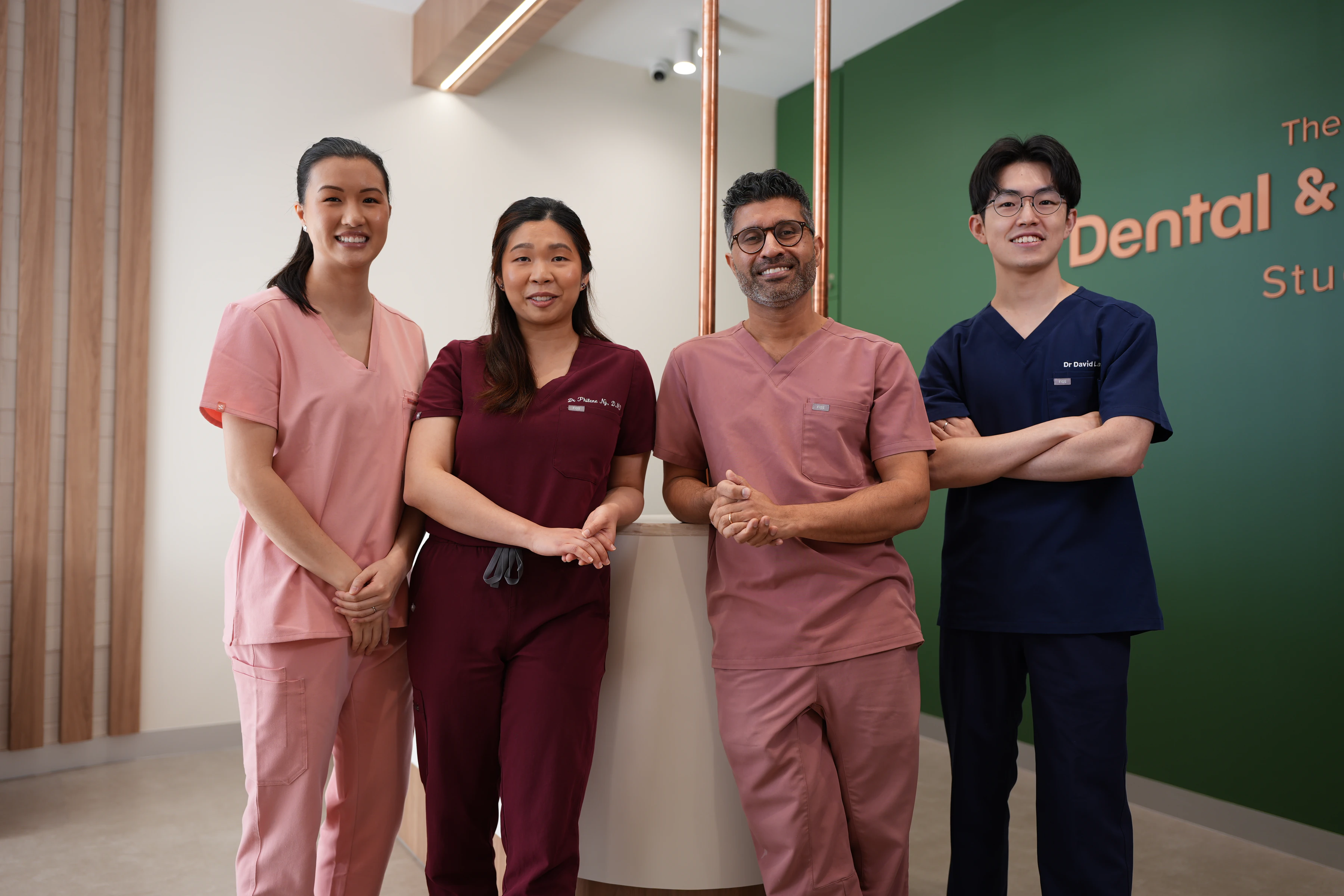
Questions
Smile makeover questions
These FAQs can help you understand how smile makeover planning is usually discussed, especially when treatment may need to be staged across cosmetic and restorative steps.
A smile makeover is not suitable as a one-size-fits-all package. A responsible plan should include diagnosis, alternatives, risks, maintenance, fees, and time to consider the written recommendation.
What is a smile makeover?
A smile makeover is a planning process for people with one or several concerns about visible teeth, gums, bite, or older dental work. It may involve one treatment, a staged combination, monitoring, or no elective treatment depending on the findings.
- The plan can include whitening, bonding, veneers, crowns, aligners, restorative care, or maintenance planning.
- The treatment mix should follow diagnosis rather than a fixed package.
Is a smile makeover one treatment?
No. The phrase describes planning, not a single procedure. For one person it may mean whitening only; for another it may mean replacing old restorations, aligning teeth first, repairing worn edges, or staging several treatments over time.
Why this matters
If several concerns are present, choosing one treatment too early can miss the reason the teeth look or feel unsettled.
Where do I start if I am unsure what bothers me most?
Start with a consultation that separates your concerns into priorities: what affects health, what affects function, what affects appearance, what is optional, and what can wait.
- Bring photos or notes if they help explain what you notice.
- It is reasonable to ask for a staged written plan rather than deciding everything at once.
What does a smile makeover assessment look at?
The assessment reviews the cosmetic concern itself and the clinical factors that could change what is safe, conservative, or worth doing.
Clinical foundations
- Decay risk, gum health, bleeding, plaque traps, and any active symptoms.
- Whether the teeth and gums are stable enough for elective cosmetic care.
Function and structure
- Bite contacts, grinding or clenching, worn edges, enamel support, tooth position, and cleaning access.
- Whether alignment, repair, or protection should be discussed before cosmetic changes are matched.
Planning realities
- Existing crowns, fillings, veneers, bonding, bridges, or implants.
- Number of teeth involved, life timing, budget, maintenance, and whether staging or waiting makes more sense.
Can a smile makeover still look natural?
Natural-looking planning usually comes from restraint. Shade, translucency, edge shape, gum line, tooth width, facial context, and neighbouring teeth all need to be considered.
A useful question
Ask what the dentist would leave unchanged and why. The answer can tell you whether the plan is trying to solve your concern or over-treating it.
What often helps
- Keeping proportion and edge shape believable for your face and surrounding teeth.
- Matching visible work in the right sequence so brightness and opacity do not overpower the smile.
- Respecting bite, speech, cleaning access, and the condition of existing dental work.
Is a smile makeover different from veneers?
Yes. A smile makeover is the planning process; veneers are one possible treatment within that plan. Some people may be suitable for porcelain veneers, while others may be better served by whitening, bonding, aligners, replacing older dental work, crowns for structural reasons, monitoring, or a smaller first step.
- Ask why veneers are being recommended instead of whitening, bonding, aligners, crowns, repair, or monitoring.
- Ask how much tooth preparation would be involved if veneers are part of the plan.
Should whitening happen before other cosmetic dental work?
Often it is discussed early if natural tooth colour is part of the concern and whitening is suitable. New bonding, veneers, crowns, or fillings are usually matched to the tooth shade at the time they are made.
Important limit
Whitening does not lighten existing crowns, veneers, bridges, fillings, or bonding, so old dental work needs to be identified first.
What if I have old crowns, fillings, bonding, or veneers?
Existing dental work needs a restorative assessment as well as a cosmetic discussion. Colour mismatch may be only one part of the issue; margins, cracks, decay risk, gum response, and tooth strength can also matter.
- Some old dental work can be repaired or polished.
- Some may need replacement if the restoration or tooth underneath is compromised.
Can Invisalign be part of a smile makeover?
Yes, clear aligners may be discussed when tooth position, spacing, crowding, or rotations are part of the concern. Moving teeth first can sometimes make later bonding, veneers, or crowns more conservative.
What needs checking
- Gum health, roots, bite, crowding severity, daily wear, attachments, and retention.
- Whether movement would meaningfully improve the later restorative plan.
What if I grind or clench my teeth?
Grinding and clenching can affect material choice, bite planning, risk of chips or fractures, and whether a nightguard or staged bite care should be discussed.
- Tell the dentist if you wake with jaw tension, notice worn edges, or have broken restorations before.
- Bite forces can influence bonding, veneers, crowns, and maintenance planning.
How long does smile makeover planning take?
Timing varies with the diagnosis and sequence. A simple whitening or bonding plan may be shorter, while aligners, gum care, replacing older restorations, crowns, veneers, or staged treatment can take longer.
Why timing can change
Health stabilisation, whitening response, aligner movement, laboratory stages, review appointments, and your own decision time can all affect the schedule.
Why sequencing matters
- Whitening may need to happen before visible restorative work is matched.
- Tooth movement may need to happen before final bonding, veneers, or crowns are designed.
- Older dental work, gum care, or missing-tooth stages can change the timetable further.
How much does a smile makeover cost in Perth?
Cost varies because a smile makeover might involve one conservative option or several staged treatments. There is no single smile makeover package fee.
Guide component fees from our current public fees guide
- Teeth whitening from $250.
- Dental fillings from $230.
- Dental crowns from $1,500.
- Dental veneers from $1,550.
- Invisalign from $3,500.
- Dental implants from $4,500 when missing-tooth planning is relevant.
What changes the final fee
- Assessment, diagnosis, oral health, and the number of teeth involved.
- Chosen treatments, records, materials, bite or grinding issues, and whether staging is needed.
- Whitening, restorative, alignment, or implant components, plus maintenance and review planning.
Important fee disclaimer
This is a guide only, not a personal quote. The written plan should explain what is included, what is optional, what may change after assessment, and what future maintenance could still matter.
What to ask for
- A written sequence with itemised stages where possible.
- Which parts relate to health, function, appearance, maintenance, and future replacement.
- Whether payment options or health fund claiming may be relevant to any stage.
SourcesAhpra: Advertising hub
Can I stage treatment over time?
Often, yes, if the clinical findings allow it. Staging can help with budget, timing, comfort, and decision time, but some health or sequencing steps may need to happen before elective choices.
- Ask which stages are clinically time-sensitive, which are optional, and which depend on earlier findings.
- Ask what risks come with waiting between stages.
What staging can mean
- Health stabilisation or restorative repair before elective cosmetic changes.
- Whitening before new visible restorations are matched.
- Aligners before final bonding, veneers, crowns, or missing-tooth replacement decisions.
- Time to pause after one stage and decide whether another stage is still worthwhile.
What risks, limitations, or maintenance should I understand?
Risks depend on the treatments involved. They may include sensitivity, tooth preparation, chips, repairs, replacement over time, gum changes, bite issues, retention needs, or whitening and shade mismatch.
Possible limitations or future needs
- Treatment may not be suitable until oral health, gum health, or bite stability improves.
- The recommended sequence may change after records, scans, or early stages.
- Some options can involve irreversible tooth preparation.
- Sensitivity, chips, wear, debonding, fracture, or repairs can occur.
- Older restorations may need replacement rather than cosmetic masking.
- Grinding, clenching, diet, smoking, and home care can affect longevity.
- Repairs, replacement, whitening maintenance, retainers, or nightguards may be needed over time.
Conservative alternatives still count
- Treating less can be sensible.
- Monitoring can be sensible.
- Choosing no elective treatment can be the right recommendation in some cases.
What should I ask before starting a smile makeover?
Ask for the diagnosis, the alternatives, the sequence, the likely fees, the maintenance plan, the risks in your mouth, and what would make the dentist recommend waiting or choosing a smaller option.
- Ask what can be left alone.
- Ask which part of the plan is cosmetic, restorative, orthodontic, or preventive.
- Ask for enough time to consider the written recommendation.
SourcesAhpra: Advertising hub