Tell us who is coming, who is nervous, who is overdue, and whether anyone has pain or a broken tooth so the appointment can be planned with the right pace.
Family dentist
Family Dentist Perth, care that keeps the details together
Family dentistry is about keeping the history together. We help children, teens, adults, and older family members plan regular reviews, prevention, gum care, restorative monitoring, and urgent dental concerns in one calm setting for Shelley and Parkwood families.
Appointments can reflect each person's age, symptoms, comfort needs, CDBS questions, existing dental work, and the practical timing of bringing more than one family member in.
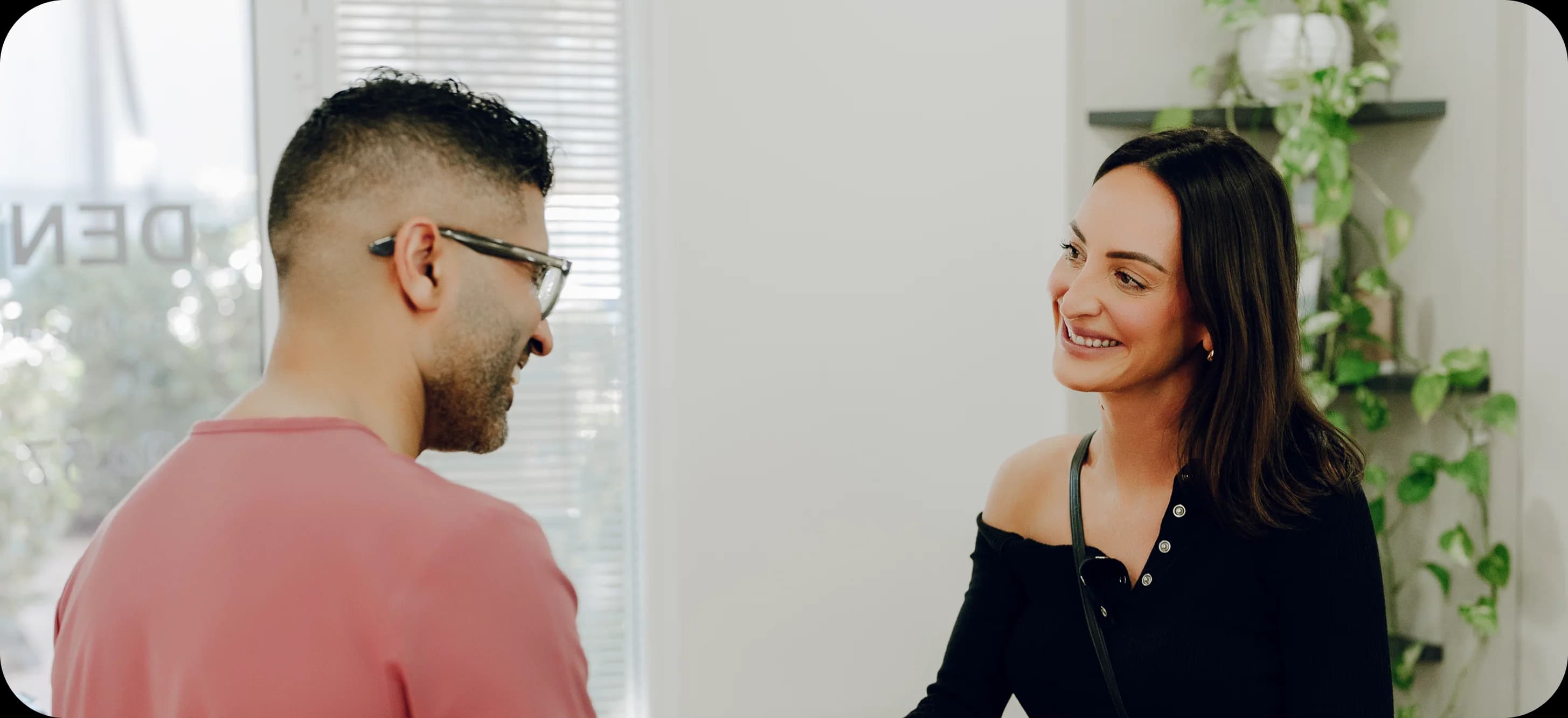
With support tailored to your needs, including suitability, comfort, next steps, and clear guidance after assessment.
Reviewed by Dr. Philene Ng for family dentistry scope, urgent-symptom wording, CDBS language, and practical appointment-planning guidance.
Preventive appointments are confirmed after your clinician assesses your teeth, gums, comfort needs, and fee items.
FIRST MINUTE
What to know before you book family care
Family care is easiest when you know who needs routine prevention, who needs a child-specific visit, and who needs earlier advice before everyone turns up together.
One team can keep the details together
Children's eruption, teen brushing, adult gum health, and older restorative maintenance can all be reviewed with the wider family history in mind.
Fees are itemised by person
A family booking is not one flat price. Adult reviews, child visits, CDBS questions, x-rays, fluoride, urgent care, and restorative needs are all discussed person by person.
Tell us if you are coordinating multiple family members
If you are lining up school, work, transport, symptoms, and who feels nervous, call first so the day can be planned before you arrive.
Guided start
Choose what feels closest
Family dental care can start from continuity, a child question, an overdue adult, anxiety, an urgent symptom, or routine prevention.
What brought your family here?
It can be easier when one local team understands the wider family history and the practical reality of getting everyone seen.
We need one dentist for the family
It can be easier when one local team understands the wider family history and the practical reality of getting everyone seen.
What we would check
We ask who is due, who is overdue, who has symptoms, who is nervous, and whether children need CDBS or age-specific guidance.
Important to know
Each person still receives their own assessment, fee discussion, and next-step plan.
A useful first question
Can we plan the family appointments together without rushing anyone?
My child or teen needs a dental visit
Children and teenagers need dental care that fits growth, confidence, sport, diet, brushing, and changing adult teeth.
What we would check
We check eruption, cleaning access, grooves, bite development, sensitivity, dental injury history, and parent questions.
Important to know
CDBS eligibility, balance, covered services, and any private fee gap should be checked before treatment.
A useful first question
What should we watch as teeth and habits change?
An adult is overdue
A long gap is common. The useful first step is a baseline and a calm explanation of priorities.
What we would check
We review teeth, gums, old dental work, bite wear, sensitivity, toothache history, and areas that may need x-rays.
Important to know
Findings are separated into what is stable, what can be monitored, and what needs a planned appointment.
A useful first question
Can we restart without turning the visit into a lecture?
Someone is nervous
Nervous children, teens, adults, and seniors may all need a different pace and different explanations.
What we would check
We ask what has been difficult before, agree on pause signals, explain steps before they happen, and keep decisions staged.
Important to know
If urgent symptoms are present, comfort planning still matters, but timing may need to change.
A useful first question
Can the appointment be paced around the person who is most worried?
We have a toothache or broken tooth
A painful or broken tooth can change what should be booked first.
What we would check
Call for advice if there is toothache, swelling, dental trauma, a broken tooth, fever, or pain affecting eating or sleep.
Important to know
Call 000 or seek emergency care if there is trouble breathing, talking, or swallowing, heavy bleeding, facial swelling with fever, or the person seems seriously unwell.
A useful first question
Should this be triaged before a routine family visit?
We want prevention and routine reviews
Regular reviews help the family stay organised, especially when ages, gums, restorations, and home-care needs differ.
What we would check
We assess teeth, gums, existing dental work, cleaning access, diet and brushing questions, and recall timing for each person.
Important to know
The interval can vary between family members depending on age, risk, symptoms, and findings.
A useful first question
What review timing makes sense for each person?
Your visit
A simple family dental visit
The goal is to keep the visit organised enough that each person still leaves with clear next steps rather than one blurred family conversation.

- 01
Family context and comfort check
We ask who is attending, what each person needs, whether anyone is nervous, and whether symptoms need to be triaged before routine care.
- 02
Age-appropriate assessment
Children, teens, adults, and seniors are assessed differently, with attention to teeth, gums, bite, soft tissues, eruption, existing dental work, and symptoms.
- 03
Preventive clean or guidance where suitable
Some family members may have a scale and clean, while others may need brushing coaching, CDBS discussion, x-ray questions, or a symptom-focused assessment first.
- 04
Findings, fees, and next steps by person
Before you leave, the team can explain what is stable, what needs earlier attention, which fees apply to each person, and what should be booked next.
Fee guide
Family dental cost guide
Guide only, not a personal quote. Family fees are itemised by person once we know who needs routine care, who needs child-specific planning, and whether anyone has symptoms or CDBS questions.
The usual adult routine-care starting point when a standard preventive visit is appropriate.
Useful when one family member needs a clinical review before a clean or treatment discussion is planned.
A sensible starting point when you need advice, a second opinion, or a clearer next step before treatment.
If a child may use CDBS, eligibility, remaining balance, covered services, and any private fee gap should be checked before care.
What can change the fee
X-rays, fluoride, fissure sealing, periodontal charting, urgent treatment, or restorative care can change the itemised fee for that person.
Who may need a different start
A child, an overdue adult, a nervous family member, or someone with pain may need a different appointment type from the rest of the household.
CDBS and health funds
Eligible children may be able to use CDBS for some basic dental services. Private health rebates vary by fund, policy, limits, and item numbers.
Family care team
Your family dental care team
Family dental care may involve an Oral Health Therapist and dentists depending on age, symptoms, comfort needs, preventive care, and whether treatment planning or referral is required.

Principal Dentist
Dr. Meheransh Chopra
Principal Dentist, DEN0001372159
Broader dental planning when family findings connect to restorative, bite, implant, or complex care needs.

Oral Health Therapist
Lydia Lee
Oral Health Therapist
Preventive cleans, child and teen oral health guidance, gum maintenance, and practical home-care coaching.

Dentist
Dr. David Lau
Dentist, DEN0002677043
General dentistry, anxious-patient support, restorative assessment, and everyday family dental concerns.

Dentist
Dr. Philene Ng
Dentist, DEN0002459496
Clinical assessment, diagnosis, treatment planning, and family-wide preventive care guidance.
FAQs
Family dentist questions
Detailed answers for families comparing dental appointments for Shelley and Parkwood, Perth. Your clinician will still confirm what is suitable for each person after assessment.
This information is general and does not replace a dental consultation. Your dentist or oral health therapist will confirm what is suitable for you after assessment.
What does a family dentist do?
A family dentist provides general dental care for different ages in the same practice setting. At The Dental and Implant Studio, that can include regular reviews, preventive cleans where suitable, gum checks, child and teen guidance, overdue adult baselines, restorative monitoring, toothache assessment, and treatment planning where clinically indicated.
- Each person still receives individual assessment and advice.
- Continuity helps the team compare changes over time and keep recall planning organised.
What family care can include
Family dentistry can cover regular reviews, preventive cleans where suitable, gum checks, child and teen guidance, overdue adult baselines, restorative monitoring, toothache assessment, and treatment planning where clinically indicated.
Why continuity helps
Keeping care in one setting can make it easier to compare changes over time, remember who is due, and plan different needs without treating every family member as though they need the same appointment.
Sources for this answerHealthdirect: Dental care and check-ups
Can we book multiple family members together?
Often, yes, but it depends on who needs care, ages, symptoms, appointment length, and clinician availability. Call the clinic if you are trying to coordinate multiple family members, especially if someone is nervous, overdue, or has pain. The team can help decide whether back-to-back appointments or separate visits are more appropriate.
- Tell us if any family member has toothache, swelling, trauma, a broken tooth, fever, or pain affecting eating or sleep.
- If a visit may involve CDBS for a child, bring Medicare details so eligibility and balance can be checked where relevant.
What affects appointment coordination
The right timing depends on who needs care, each person's age, symptoms, nervousness, appointment length, CDBS questions, and clinician availability.
- Back-to-back appointments may work well for routine reviews.
- Separate visits may be better if someone is nervous, overdue, very young, or has pain that needs focused assessment.
What to mention when booking
Tell us who is attending, who has symptoms, who is nervous, and whether a child may use CDBS so the appointment can be planned before everyone arrives.
Sources for this answerHealthdirect: Dental care and check-upsServices Australia: Child Dental Benefits Schedule
How often should my family see a dentist?
Review timing can vary between family members. Many people attend regular reviews, but the right interval depends on age, gum health, decay risk, symptoms, medical history, previous dental work, orthodontic retainers, dry mouth, home care, diet, and whether treatment is being monitored. We explain the recall timing for each person after assessment.
- Children and teens may need review timing that reflects growth, eruption, sport, diet, and brushing access.
- Adults with gum inflammation, restorations, dry mouth, or a long gap between visits may need a different interval from someone whose mouth is stable.
One household can still need different intervals
A child with eruption questions, a teen with sport or brushing challenges, an adult with gum inflammation, and a senior with restorative work may all need different recall timing.
How recall timing is explained
After assessment, we explain the timing for each person based on age, risk, symptoms, medical history, home care, existing dental work, and whether anything is being monitored.
What if an adult in the family is overdue or nervous?
They can still start with a baseline appointment. We ask what has changed, what feels uncomfortable, and what has made visits difficult before. The goal is to understand the current condition, separate urgent findings from planned care, and explain options before treatment is arranged.
- Please tell us when booking if a slower pace, explanations, or pauses would help.
- If there is swelling, fever, trauma, or severe pain, call first so timing can be triaged.
A baseline is a reasonable first step
An overdue or nervous adult does not have to arrive ready for every possible treatment decision. The first step can be understanding what has changed and what needs attention first.
How we pace the visit
Tell us if explanations, pauses, or a slower appointment pace would help. If there is swelling, fever, trauma, or severe pain, call first so timing can be triaged.
Can children use CDBS at a family dental visit?
Some children aged 0 to 17 can use the Child Dental Benefits Schedule if they are eligible for Medicare and the family receives an eligible Australian Government payment. For eligible children whose CDBS period starts in 2026, Services Australia lists a cap of up to $1,158 over two consecutive calendar years for basic dental services. Eligibility, remaining balance, applicable cap, covered services, and any private fee gap need to be checked before care.
- CDBS can include basic dental services such as check-ups, x-rays, cleaning, fissure sealing, fillings, root canals, and extractions, subject to rules and available balance.
- It does not cover orthodontic dental work, cosmetic dental work, or dental services provided in hospital.
What needs confirming
Eligibility, remaining balance, applicable cap, covered services, and any private fee gap need to be checked before care. Bring Medicare details if CDBS may be relevant for a child in the family.
What CDBS may include
CDBS can include basic dental services such as check-ups, x-rays, cleaning, fissure sealing, fillings, root canals, and extractions, subject to rules and available balance.
What it does not cover
It does not cover orthodontic dental work, cosmetic dental work, or dental services provided in hospital.
What if someone has toothache, swelling, or a broken tooth?
Call the clinic for advice before treating this as a routine family review. Toothache, swelling, dental trauma, a broken tooth, fever, or pain that affects eating or sleep may need different timing. Call 000 or go to an emergency department if someone has trouble breathing, talking, or swallowing, heavy bleeding, severe swelling, fever with facial swelling, or seems seriously unwell.
- If an adult tooth is knocked out, seek help immediately and keep the tooth moist in milk or saliva if you can do so safely.
- If a baby tooth is knocked out, do not put it back into the socket. Seek urgent dental advice.
Call before booking a routine family review
Toothache, swelling, dental trauma, a broken tooth, fever, or pain that affects eating or sleep may need different timing from a routine family appointment.
When emergency care is needed
Call 000 or go to an emergency department if someone has trouble breathing, talking, or swallowing, heavy bleeding, severe swelling, fever with facial swelling, or seems seriously unwell.
If a tooth is knocked out
If an adult tooth is knocked out, seek help immediately and keep the tooth moist in milk or saliva if you can do so safely. If a baby tooth is knocked out, do not put it back into the socket.
Sources for this answerHealthdirect: Toothache and swellingHealthyWA: Dental injury - knocked out tooth
Are public dental options available for children in WA?
Dental Health Services WA provides information about public dental pathways in Western Australia. It says the School Dental Service provides free dental care to students aged 5 to 16 or until the end of year 11, if they attend a Department of Education recognised school. It also says some children aged 0 to 4 whose name appears on a parent's Health Care or Pension Concession Card may be eligible for care through a general dental clinic.
School Dental Service
Dental Health Services WA says the School Dental Service provides free dental care to students aged 5 to 16 or until the end of year 11, if they attend a Department of Education recognised school.
Younger children
It also says some children aged 0 to 4 whose name appears on a parent's Health Care or Pension Concession Card may be eligible for care through a general dental clinic.
Will every family member need x-rays?
No. X-rays are not automatically needed for every person at every visit. They may be discussed if the clinician needs information that cannot be seen directly, such as between teeth, under old restorations, around roots, around developing teeth, or near an area with pain or a suspicious finding. We explain why an x-ray is being discussed and whether it affects the fee before proceeding.
Why one person may need imaging and another may not
X-rays are based on the question being asked for that person, such as checking between teeth, under restorations, around roots, around developing teeth, or near pain and suspicious findings.
How we explain the decision
We explain why an x-ray is being discussed, what it is expected to show, and whether it affects the fee before proceeding.
Sources for this answerHealthdirect: Dental check-upHealthdirect: Looking after your baby or child's teeth
How are family dental fees explained?
Fees are itemised by person and by service. Adult check-up and clean appointments are listed from $205, while child visits, CDBS use, x-rays, fluoride, fissure seals, gum treatment, urgent care, and restorative treatment depend on what is clinically indicated. We confirm fees before care and can provide a written item breakdown where needed.
- Health fund rebates vary by fund, policy, annual limits, waiting periods, and item numbers.
- If a child may use CDBS, eligibility, balance, covered services, and any private fee gap should be checked before care.
Itemised by person
A family visit is not priced as one identical service for everyone. Adult check-ups, child visits, CDBS use, x-rays, fluoride, fissure seals, gum treatment, urgent care, and restorative care are itemised by person and by service.
Before care proceeds
We confirm fees before care and can provide a written item breakdown where needed. If a child may use CDBS, eligibility, balance, covered services, and any private fee gap should be checked before care.
Booking multiple family members
Tell us who needs care, their ages, symptoms, comfort needs, and whether you are trying to coordinate appointments together.
Useful detail
Multiple appointments are planned around timing, clinician availability, age, symptoms, and the type of care each person may need. If someone has pain, swelling, trauma, or a broken tooth, call first so the team can triage that before routine scheduling.
Sources for this answerHealthdirect: Dental care and check-ups
What a family dental visit can include
Family visits may include individual examinations, gum checks, preventive cleans where suitable, child guidance, and clear findings for each person.
Useful detail
A family visit is not one identical service for everyone. Your clinician may discuss x-rays, fluoride, fissure seals, periodontal charting, urgent care, or a separate treatment plan only where clinically indicated for that person.
When urgent symptoms should be triaged
Toothache, swelling, dental trauma, broken teeth, fever, and pain affecting eating or sleep should be discussed before booking a routine family visit.
Useful detail
Call 000 or go to an emergency department if someone has trouble breathing, talking, or swallowing, heavy bleeding, severe swelling, fever with facial swelling, or seems seriously unwell. If an adult tooth is knocked out, seek help immediately and keep the tooth moist in milk or saliva if you can do so safely.
Sources for this answerHealthdirect: Toothache and swellingHealthyWA: Dental injury - knocked out tooth
Children, CDBS, and public dental options
Some eligible children can use CDBS for basic dental services, and WA public child dental services may be available depending on age and eligibility.
Useful detail
Services Australia confirms CDBS eligibility, balance, covered services, and cap details. Dental Health Services WA provides information about the School Dental Service and public dental pathways for eligible children in Western Australia.