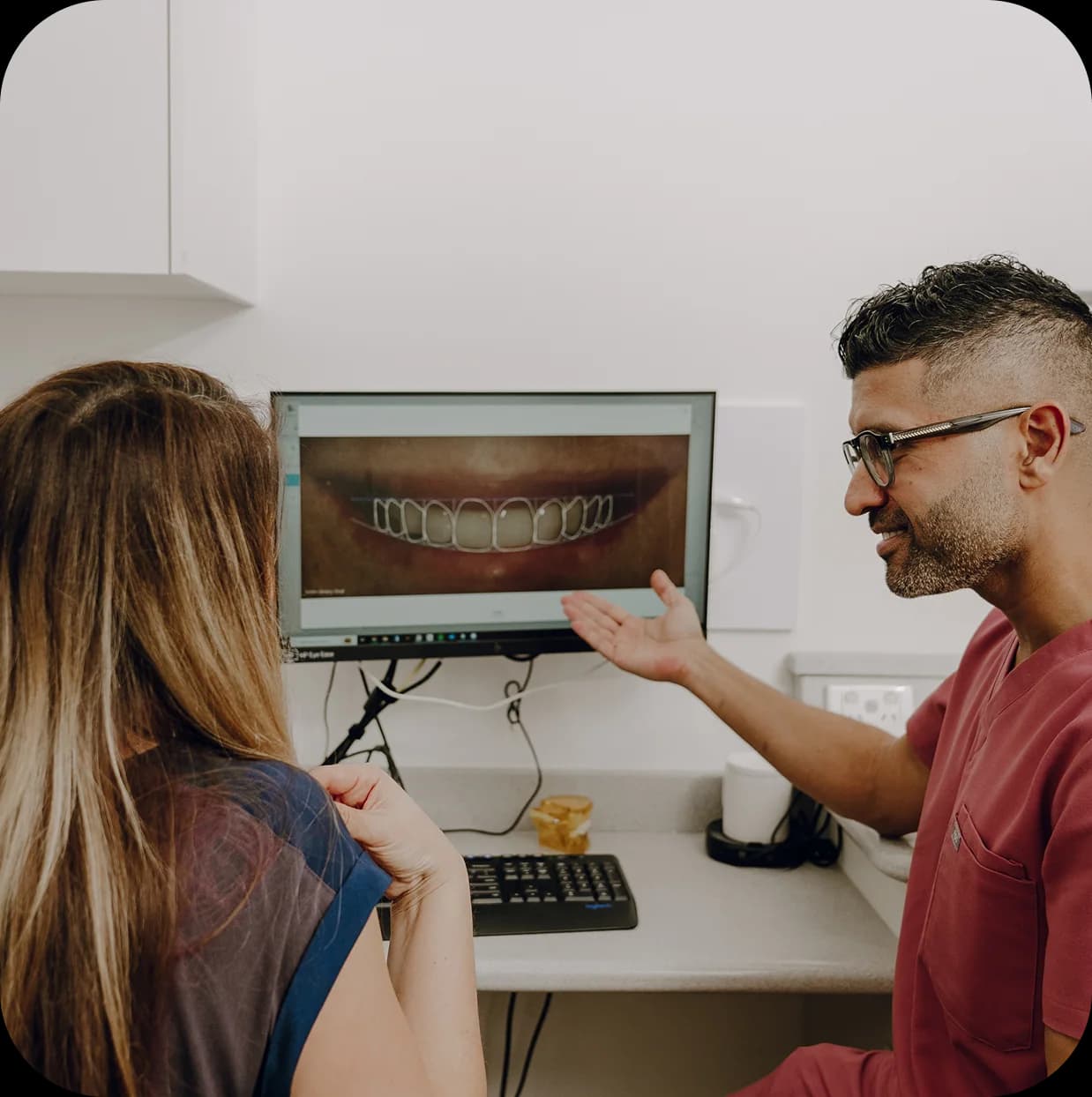
Suitability depends on enamel, bite, gum health, tooth position, existing restorations, expectations, and whether a simpler option could solve the concern with less treatment.
Cosmetic dentistry for Shelley and Parkwood
Porcelain Veneers in Perth, Considered Carefully
If veneers are on your mind, you may want teeth that feel more even, less worn, or less distracting without feeling pushed into a cosmetic plan. A careful consultation starts with what is bothering you, then checks enamel, bite, gum health, old dental work, alternatives, and long-term care before veneers are recommended.
With support tailored to your needs, including suitability, comfort, next steps, and clear guidance after assessment.
Veneer guidance is reviewed for conservative planning, suitability, alternatives, risks, and maintenance language.
Suitability, risks, alternatives, timing, maintenance, and fees are discussed after assessment.
FIRST MINUTE
What to know in the first minute
If you only read one section, start here. Veneers can be a sensible option for selected teeth, but the calmer decision usually comes after diagnosis, conservative option checking, and cost clarity.
They are not the first answer to every cosmetic concern
Some veneer questions turn out to be whitening, bonding, minor reshaping, aligner, or monitoring discussions once the diagnosis is clear.
Enamel, bite, and gums matter before the veneer plan
The teeth need enough support for a conservative plan. Grinding, gum instability, or heavy restorations can change the recommendation.
The guide fee starts with a real number, not a package promise
The clinic fees guide lists Dental veneers from $1,550. A consultation from $70 can help clarify whether veneers belong in the plan before a written quote is discussed.
DECISION GUIDE
Three checks before you say yes to veneers
Most patients do not need every detail at once. These three questions usually decide whether veneers are worth exploring further.
Is the concern really about colour, shape, or tooth position?
Some veneer requests are actually whitening, bonding, aligner, or restorative planning questions once the tooth position and diagnosis are clear.
Compare the optionsAre the teeth suitable to restore conservatively?
Enamel support, bite forces, grinding, gum stability, and old restorations shape whether veneers are sensible now or whether another pathway is safer.
See what we assessWill the written quote explain the trade-offs?
A useful plan should make preparation, number of teeth, temporaries where relevant, maintenance, and possible changes after assessment easier to understand.
Understand cost guidanceYOUR CONCERNS
What are you hoping to change?
Choose the concern that sounds closest. The guidance cannot diagnose suitability, but it can help show what we would want to check before veneers are discussed.

Worn or chipped edges
Edges can change because of a one-off chip, grinding, acid wear, tooth position, or bite pressure. The first step is understanding why the change happened before deciding how much treatment makes sense.
This may be about wear, bite pressure, or repair planning.
We would check why the edge changed before adding porcelain or composite.
- The tooth may need bonding, smoothing, bite protection, restorative care, or monitoring before veneers are discussed.
- If grinding is active, porcelain can sit under higher stress and may need a more cautious plan.
OPTION COMPARISON
When veneers are not the only conversation
The useful question is not whether porcelain is better. It is whether veneers are the right level of treatment for the diagnosis, the tooth position, and the maintenance involved.
Whitening can be the more conservative answer when colour is the main concern.
Suitable natural teeth with shade concerns may be better served by whitening before any restorative change is planned.
May suit when
Healthy natural teeth where colour is the main issue and shape is already acceptable.
Consider first
Whitening does not change the colour of existing crowns, veneers, fillings, or bonding.
Composite can suit smaller additive changes or repair-led treatment.
Tooth-coloured resin may be discussed for minor chips, edge changes, trial changes, or repairability where chairside adjustment matters.
May suit when
Smaller additive repairs, edge reshaping, and cases where future repair flexibility matters.
Consider first
Composite can stain, chip, need polishing, and may not offer the same surface stability as porcelain in selected cases.
Moving teeth first can sometimes reduce how much restorative change is needed.
Tooth position can drive the cosmetic concern. Aligners may make later bonding or veneers more conservative in selected cases.
May suit when
Crowding, rotations, spacing, or protrusion where tooth position is the main problem.
Consider first
Requires assessment of gum health, bite, roots, compliance, attachments, and retention.
ASSESSMENT
What we assess before discussing veneers
A veneer recommendation should be earned by the findings. These checks help decide whether treatment is suitable now, whether another option is more conservative, or whether oral health needs attention first.
Porcelain bonds best when there is enough healthy tooth structure to support the restoration conservatively.
Why this matters
If enamel is thin, teeth are heavily filled, or previous restorations have reduced support, the plan may need to move toward bonding, crowns, repair, or monitoring.
Heavy bite forces, clenching, and grinding can increase the risk of chips, sensitivity, debonding, or fracture.
Gums frame the final proportions and need to be stable enough for margins, cleaning, and review care.
Visible dental work may not bond, whiten, or age like natural enamel, so the plan has to identify what is being kept and what is not.
Veneers need realistic expectations about care, review visits, repair options, and replacement planning.
SIMPLE PROCESS
A simple veneer planning process
The exact sequence varies by patient, but a calmer veneer conversation usually follows these stages rather than rushing straight to treatment.
- 01
Consultation and goals
We listen to what keeps catching your eye and what you want to avoid, including obvious-looking teeth, cost surprises, and irreversible choices.
Your description helps turn a vague cosmetic concern into a planning question that can be checked properly.
- 02
Health, bite, photos, and records
Gums, enamel, restorations, bite forces, wear, and the visible tooth line are assessed before treatment options are narrowed.
If health needs stabilising first, that becomes part of the plan rather than an afterthought.
- 03
Compare the conservative options
We discuss whether whitening, bonding, aligners, monitoring, or another restorative pathway could solve the concern with less treatment.
You should understand why an option is being recommended and what trade-offs come with it.
- 04
Design, preparation, and temporaries if relevant
If veneers still make sense, shade, shape, texture, preparation, and whether a temporary stage is needed are discussed before treatment proceeds.
Ask how much tooth structure may be involved and which stages are part of the written plan.
- 05
Fit, review, and maintenance
The veneers are checked for fit, margins, and bite before review care, cleaning access, and maintenance are explained.
Maintenance is part of the decision from the start, not something to think about only after treatment.
COST CLARITY
Understanding veneer fees and the written quote
It is reasonable to want a real starting point before you book. The clinic fee guide lists Dental veneers from $1,550, but that is guide only and does not mean every veneer plan is one fixed fee.
Veneer fees vary with material, number of teeth, bite forces, shade planning, and preparation requirements.
Useful when you need advice, a second opinion, or a clearer next step before treatment begins.
Guide only, not a personal quote. Your final veneer fee depends on assessment, diagnosis, number of teeth, material, records, bite or grinding, enamel, preparation, temporaries or lab stages, related whitening or restorative care, maintenance, and what is confirmed in the written quote.
Number of teeth being treatedPorcelain material and laboratory workPhotos, scans, or planning recordsBite forces, grinding, and enamel supportWhitening or restorative sequencing before veneersPreparation and temporary stages where relevantReplacement of old fillings, bonding, crowns, or veneersReview appointments, maintenance planning, and written quote inclusions
Ask before comparing quotes
What diagnosis supports veneers rather than whitening, bonding, aligners, crowns, or monitoring?
The consultation should help you understand what information is still needed before any fee becomes a treatment quote.
SETTLED LOOK
What usually helps veneers still look like you
Patients often worry about teeth looking obvious or overdone. The calmer answer is usually restraint and a plan that respects the teeth you already have.
Proportion before brightness
Teeth that are too wide, too long, or too opaque can draw attention even when the shade is technically lighter.
Respect the neighbouring teeth and gum line
Shade, translucency, texture, gum height, and the visible tooth line all influence whether veneers feel settled or conspicuous.
Sometimes fewer teeth or another pathway is better
Whitening first, smaller bonding changes, aligners, or leaving some teeth alone can be the more proportionate answer.
KEEP IN VIEW
What should stay in view before you decide
The deeper detail on preparation, longevity, repairs, and maintenance sits in the FAQ below. Up front, these are the main risk themes worth keeping in view.
- Some cases involve tooth preparation that may not be fully reversible.
- Grinding, clenching, and heavy bite pressure can increase the risk of chips, debonding, or replacement later.
- Veneers still need cleaning access, review care, and maintenance over time.
- If the diagnosis changes after assessment, another option may be the more conservative recommendation.
The FAQ below keeps the longer repair, alternatives, preparation, and maintenance detail available without making the first read feel like a warning wall.
QUESTIONS
Porcelain veneer questions
These FAQs can help you compare porcelain veneers more clearly, including preparation, maintenance, alternatives, repairs, and cost.
Porcelain veneers are not suitable for everyone. A responsible plan should include diagnosis, alternatives, risks, maintenance, and time to consider the written recommendation.
Are porcelain veneers suitable for everyone?
No. Porcelain veneers may be considered for selected teeth when oral health, enamel support, bite forces, gum stability, expectations, and maintenance all support the plan.
- Active decay, gum disease, heavy grinding, weak tooth structure, unrealistic expectations, or untreated bite problems can change the recommendation.
- Sometimes whitening, bonding, aligners, crowns, monitoring, or no treatment is more appropriate.
What is assessed first
The discussion starts with the teeth, gums, enamel, bite, old dental work, and what is actually causing the concern, not with a cosmetic label alone.
When another pathway may be safer
If the teeth are structurally weak, the gums are unstable, grinding is active, or the concern is mainly about colour or tooth position, another pathway may be more conservative.
Do veneers damage teeth?
Veneers can involve preparing the tooth surface so the porcelain can fit and bond. That does not mean every case is aggressive, but it does mean the amount of tooth preparation should be explained before you agree.
Preparation and enamel
Some cases are mostly additive, while others need surface preparation so the veneer can sit in proportion and meet the bite properly. Ask whether the preparation is expected to stay mainly in enamel and what that means long term.
What to ask
- How much tooth structure is expected to be prepared?
- Is the preparation mostly in enamel?
- What alternatives could involve less alteration?
Are veneers reversible?
Porcelain veneers are often not fully reversible if tooth preparation is involved. Even when preparation is minimal, the decision is better understood as a long-term restorative commitment rather than a quick cosmetic trial.
- Ask what the tooth would look and feel like without the veneer later.
- Ask what replacement could involve if the veneer chips, debonds, or needs changing over time.
Think in replacement cycles
If preparation is involved, a veneer plan should be discussed alongside review care, repair possibilities, and the reality that replacement may be needed later in life.
SourcesHealthdirect: Veneers
What is the difference between porcelain and composite veneers?
Composite veneers are usually made from tooth-coloured resin placed directly on the tooth. Porcelain veneers are custom ceramic restorations made outside the mouth and bonded later.
Composite may be discussed when
The planned change is smaller, repairability matters, or an additive approach is suitable.
Porcelain may be discussed when
A ceramic restoration is clinically appropriate for shade, texture, or shape control and the preparation and maintenance are understood.
How maintenance differs
Composite is easier to repair chairside but can stain or chip. Porcelain can offer surface stability in selected cases but still needs review care and may need replacement later.
Should I choose veneers or whitening?
If the main concern is shade on healthy natural teeth, whitening is often worth discussing before veneers. Veneers may be considered when colour is linked with shape, old restorations, deep discolouration, or other factors whitening cannot change.
- Whitening does not lighten existing veneers, crowns, fillings, or bonding.
- Whitening before new porcelain can help the final shade match the teeth you intend to keep natural.
When whitening often comes first
If the tooth shape is acceptable and the issue is mainly colour, whitening can be the more conservative first discussion before any restorative change is planned.
When veneers may still be discussed
If colour sits alongside wear, spacing, shape concerns, or restorations that will not lighten, veneers may still be part of the conversation after assessment.
Should I straighten teeth before veneers?
Sometimes. If the main cosmetic problem is crowding, rotation, spacing, or tooth position, moving the teeth first can reduce how much preparation or restorative material is needed later.
- This is not necessary for every veneer case.
- The answer depends on the bite, gum support, time frame, and how much shape change is actually needed.
Why tooth position can change the plan
When the teeth are moved into a better position first, a later cosmetic step may become smaller, more additive, or unnecessary altogether.
What to ask
- Could aligners reduce the amount of preparation?
- Would moving teeth first change how many teeth need treatment?
- How would whitening, bonding, or veneers be sequenced after alignment?
What is the difference between veneers and crowns?
A veneer is usually bonded to the front surface of a tooth, while a crown covers more of the tooth. Crowns may be considered when the tooth is already heavily restored or structurally weakened.
Why structure can change the answer
The choice should be based on tooth structure and diagnosis, not on the assumption that one option is automatically stronger or more cosmetic.
How long do porcelain veneers last?
Longevity varies. Porcelain veneers can serve for many years in suitable cases, but they can chip, debond, stain at margins, or need replacement depending on bite forces, oral hygiene, diet, gum changes, and review care.
- Ask what maintenance is expected and what could shorten veneer lifespan in your mouth.
- If you grind your teeth, protection may be part of the discussion.
What affects longevity in your mouth
The answer is shaped by grinding, bite contacts, gum health, cleaning access, smoking, the quality of the underlying tooth, and whether the plan was conservative to begin with.
What if I grind my teeth?
Grinding changes the risk profile. It can chip porcelain, loosen bonding, wear opposing teeth, and make sensitivity or fracture more likely.
- Your dentist may assess wear patterns, jaw symptoms, and bite contacts.
- A nightguard or a different treatment sequence may be discussed before veneers.
How bite protection can affect planning
A veneer plan may need bite review, protective appliance discussion, or a different restorative pathway if grinding forces are likely to overload the teeth.
Can porcelain veneers stain?
Porcelain surfaces are generally more colour-stable than composite resin, but veneers can still pick up staining at edges, around margins, or from surface changes over time.
- Cleaning habits, diet, smoking, gum changes, and restoration edges can all affect appearance.
- Existing natural teeth around veneers can change shade differently.
What maintenance can influence
Cleaning habits, review appointments, diet, smoking, gum health, and polishing of surrounding restorations can all affect how settled veneers look over time.
SourcesHealthdirect: Veneers
How many veneers do I need?
The number depends on which teeth show when you smile, which teeth are affected, how the bite works, and whether neighbouring natural teeth can be matched without over-treating them.
A conservative question
Ask which teeth genuinely need treatment and which teeth can be left alone, whitened, reshaped, or monitored.
Can veneers look obvious?
They can look obvious if shade, opacity, size, texture, gum line, or facial context are not planned carefully. A restrained plan considers the person, not a generic bright look.
- Ask how translucency, edge shape, surface texture, and neighbouring teeth will be considered.
- Ask whether fewer teeth or a staged approach would look more settled.
What usually makes veneers stand out
Overly bright shade choices, teeth that are too wide or too long, thick edges, ignored gum levels, or trying to solve a position problem with surface dentistry alone can all make the result feel less settled.
What happens if a veneer chips?
A chipped veneer needs assessment. Depending on the size, location, bite, and cause, options may include smoothing, repair, replacement, or addressing grinding or bite pressure before repair.
- Do not ignore repeated chipping, because the cause may need attention.
- Ask what emergency and longer-term repair pathways would look like before starting treatment.
Repair or replacement depends on why it chipped
A small edge issue is a different problem from a fracture caused by grinding, heavy bite pressure, or underlying tooth change. The cause matters as much as the chip itself.
SourcesHealthdirect: Veneers
How much do porcelain veneers cost in Perth?
The practice fees guide currently lists Dental veneers from $1,550 and Consultations from $70. These are starting points only, not a personal quote. Your final fee depends on assessment, diagnosis, number of teeth, material, records, bite or grinding, enamel, preparation, temporaries or laboratory stages, related whitening or restorative care, maintenance, and the written quote.
Current guide fee anchors
- Dental veneers from $1,550
- Consultations from $70
What can change the quote
- Number of teeth, material choice, and laboratory work.
- Photos, scans, and planning records.
- Bite forces, grinding, enamel limits, and existing restorations.
- Preparation, temporary stages, and related whitening or restorative care.
- Review appointments, maintenance planning, and anything confirmed in the written quote.
What a useful written quote should show
- Which teeth are included and why.
- What preparation, temporaries, lab work, fitting, and review visits are included.
- Which items may be separate or dependent on assessment findings.
What should I ask before agreeing to veneers?
Ask for the diagnosis, the alternatives, the amount of tooth preparation, the maintenance plan, the likely risks in your mouth, and what repair or replacement may involve later.
- Ask whether whitening, bonding, aligners, crowns, monitoring, or no treatment were considered.
- Ask for the written plan and enough time to think before committing.
- Ask what would make the dentist advise against veneers for you.
Questions that slow the decision down usefully
You should be able to explain back, in plain English, why veneers are being recommended, what they are replacing or changing, what the trade-offs are, and what future maintenance might look like.